
How it works
Set the eggs. The machine does the rounds.
Hatching by hand means turning every egg several times a day and opening the lid to add water. Each feature below takes one of those chores off your list.
-
Automatic turning, every 2 hours
No turning schedule to keep.
The rollers turn every egg on their own, nights and weekends included. You stop counting turns.
-
External water bottles
Add water without lifting the lid.
The bottles feed the reservoir from outside, so the chamber stays closed while you top up humidity.
-
Factory set to 100 °F, alarm
Ready to run, and it tells you if the heat drifts.
Set at the factory and adjustable on the panel. If the temperature drifts, the alarm sounds.
-
Dual air ducts, fan-forced
Air moves through the whole chamber.
A fan pushes air through two ducts, for one even temperature across the chamber.
-
Clear trays, built-in candling light
See which eggs are developing.
Candle each egg with the built-in light and keep only the ones that are growing.
-
Digital display
Every reading on one screen.
Temperature, humidity and the day counter, side by side on the panel.
Product images are illustrations.
By hand or by machine
Who does what during a batch.
Every job a hatch needs, and who does it: you, if you hatch by hand, or the machine.
| The job | By hand | With the Ovatekly |
|---|---|---|
| Turning the eggs | You, at least 3 times a day, weekends includedTexas A&M, Kansas State | Automatic rollers, every 2 hours |
| Adding water | You, as the reading drops | You refill the external bottles. The lid stays closed. |
| Watching the heat | You, with a thermometer, at least twice a day, and a daily logTexas A&M | Display shows temperature and humidity. Alarm if the temperature drifts. |
| Knowing the day | You, on a calendar | Day counter on the display |
| Candling | You, with a lamp | You, with the built-in candling light |
| Help if something looks wrong | Up to you | 21 days of Hatch Support by email, from a real person |
Turning and monitoring guidance: Texas A&M AgriLife Extension, Hatching Eggs in the Classroom (E-635), and Kansas State University. Machine features as listed on this page.
Hatch Support
21 days of technical support, on every batch.
The key days of a chicken hatch. Other species run on different calendars.
Day 0
Set up and stabilize
Disinfect the incubator and run it for several days before setting eggs (Texas A&M). Send us a photo of the display and we confirm you are ready to set eggs.
Day 7
First candling
Hold each egg to the candling light. Veins mean a chick. Send us a photo if you are unsure and we will tell you which ones to keep.
Day 18 (chicken)
Lockdown
Humidity goes up, lid stays closed. We send you a reminder.
Day 21 (chicken)
Hatch
Chicks pip, rest, then zip out over 24 hours. Leave them in until they are dry and fluffy. Then send us the photo.
What if my hatch fails?
Email us. We go through your log with you. If the unit did not hold temperature or the turner or fan failed, we replace the part or the unit under warranty. If it was a setup issue, we tell you exactly what to change for the next batch.
Where do I get fertile eggs?
Local breeders, poultry clubs, or your own flock. Fertile eggs travel badly in the mail, so buy as close to home as you can. Let stored eggs warm to room temperature for 4 to 8 hours before setting (Texas A&M).
Can I hatch quail or ducks in it?
The rollers adjust to egg size. Capacity per species will be shown on each product page once the manufacturer has confirmed it or we have measured it. Incubation periods differ by species: chicken eggs take 21 days, duck eggs 28 (Texas A&M).
How loud is it?
Two small fans.
How fast do you ship?
Every order ships free and tracked across the lower 48. Estimated delivery: 8 to 13 days. You get the tracking number as soon as the package is scanned.
Read the Hatch Guide → Day by day, and what to do when something looks wrong. Free, no email needed.
support@ovatekly.com Send the day you are on and a photo of the display. We reply Monday to Friday, 9 am to 6 pm ET.
Size Finder
Which size do you need?
Move the slider to the number of eggs you want to set at once. We show you the smallest model that takes them.
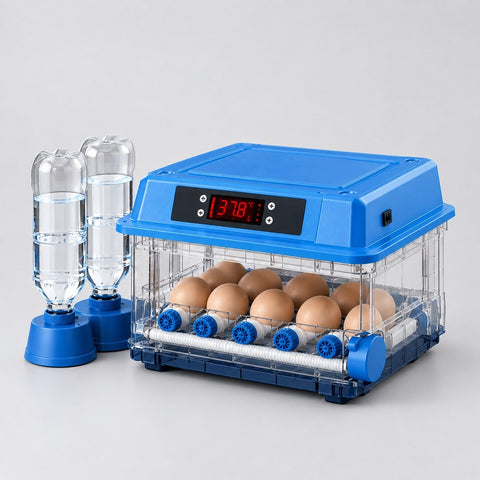
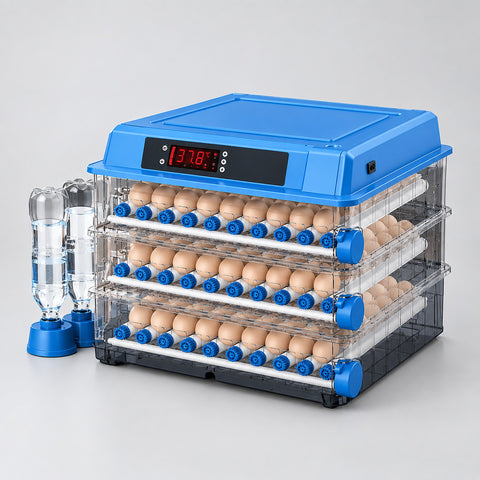
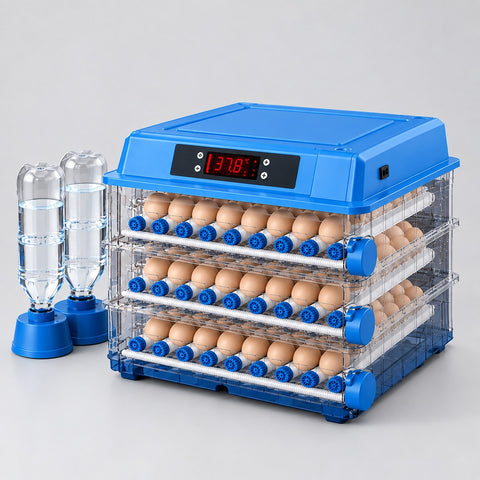
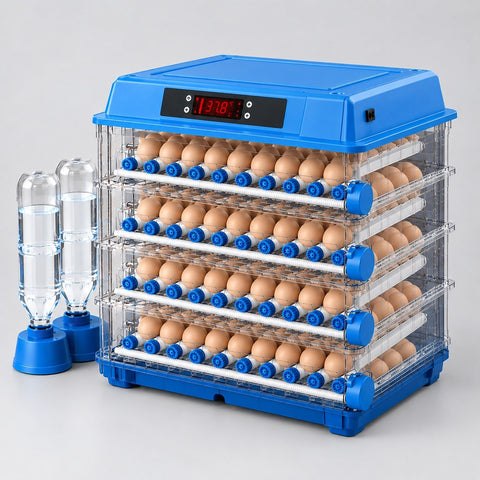
Capacities are the manufacturer's ratings. How many eggs of a given species fit depends on egg size. Product images are illustrations.
Before you buy
What comes with every Ovatekly.
The same four commitments on every order.
Shop the incubators- 30-day returnsUnused and in its box, for any reason.
- 2-year limited warrantyHeater, fan, sensor, turning motor.
- Free shipping across the lower 48Tracked. Estimated delivery: 8 to 13 days.
- 21 days of Hatch SupportA real person answers, from the day you set your eggs until they hatch.
- Questions before you buy? support@ovatekly.com