

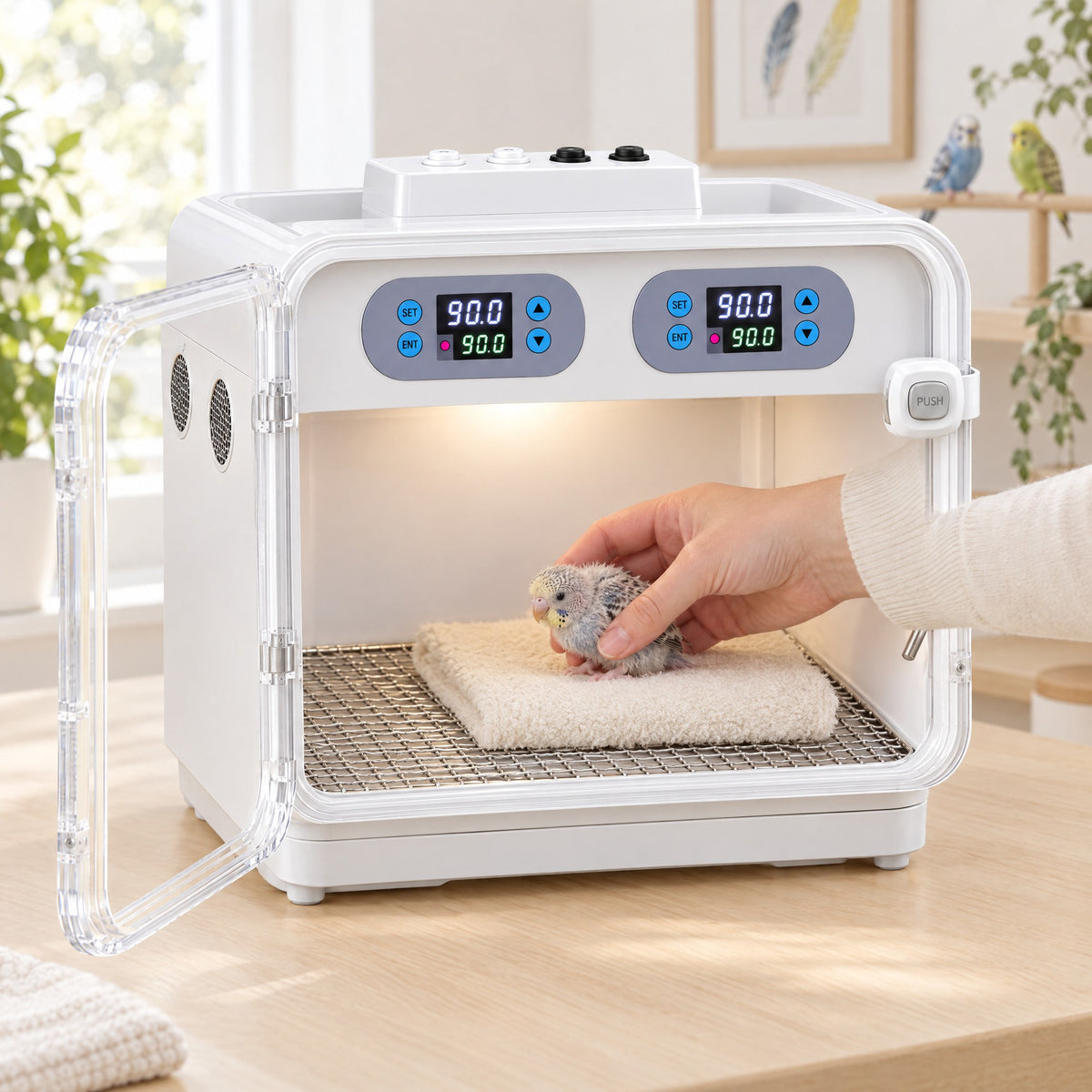
Warm-air brooder for hand-reared parrot chicks
Ovatekly Brooder · Warm-Air Bird Brooder
A warm box for chicks you are raising by hand. It holds the temperature you set for chicks you are hand-feeding, so the hours between feeds are steadier for them and for you.
Free tracked shipping across the US, estimated delivery in 5 to 10 business days.
What’s in the box
| Ovatekly Brooder, assembled | 1× |
| Two thermostats, heater, fan, interior light and UV lamp, fitted | ✓ |
| Stainless steel wire floor and pull-out drawer | 1× |
| Power cable with US plug | ✓ |
| User manual in English | 1× |

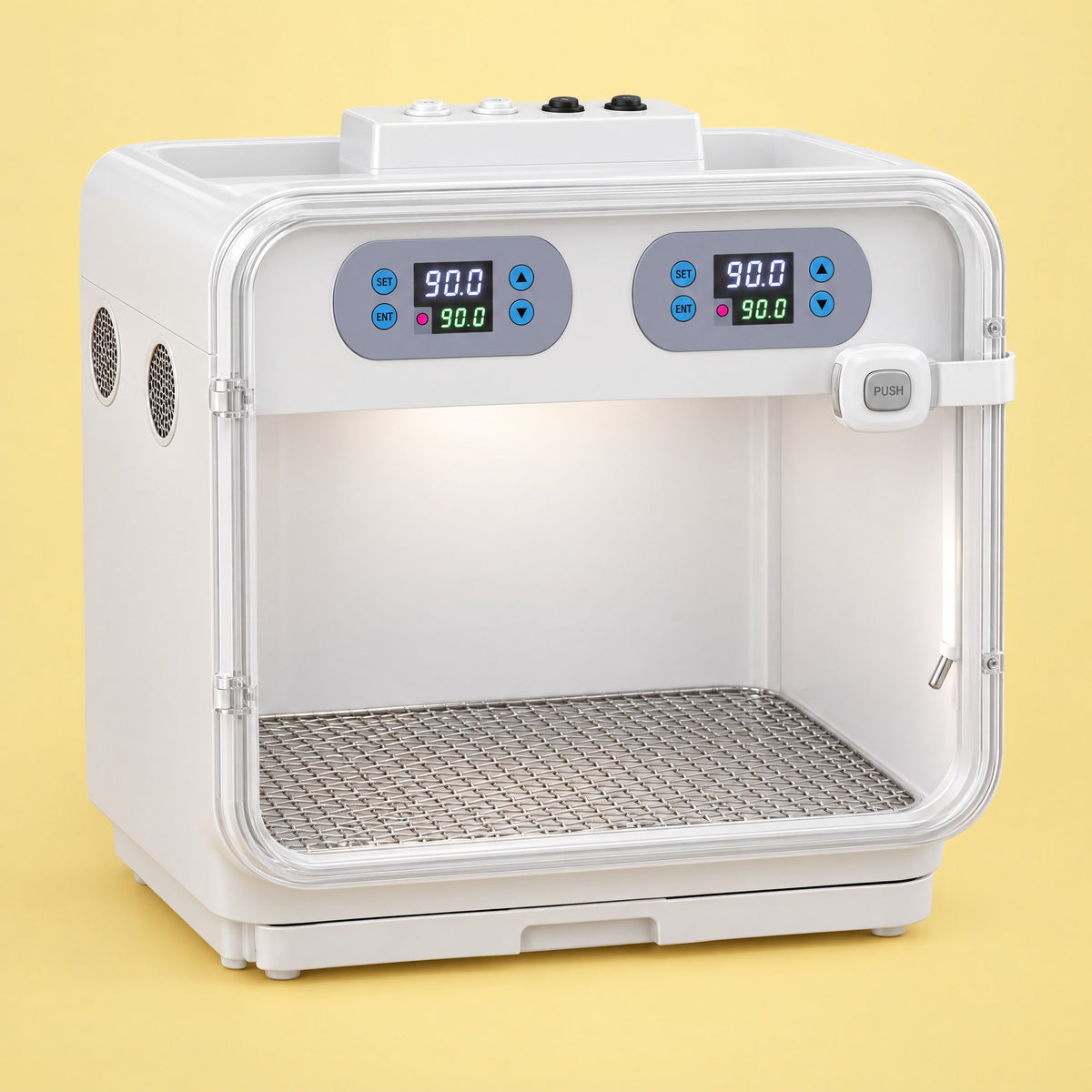
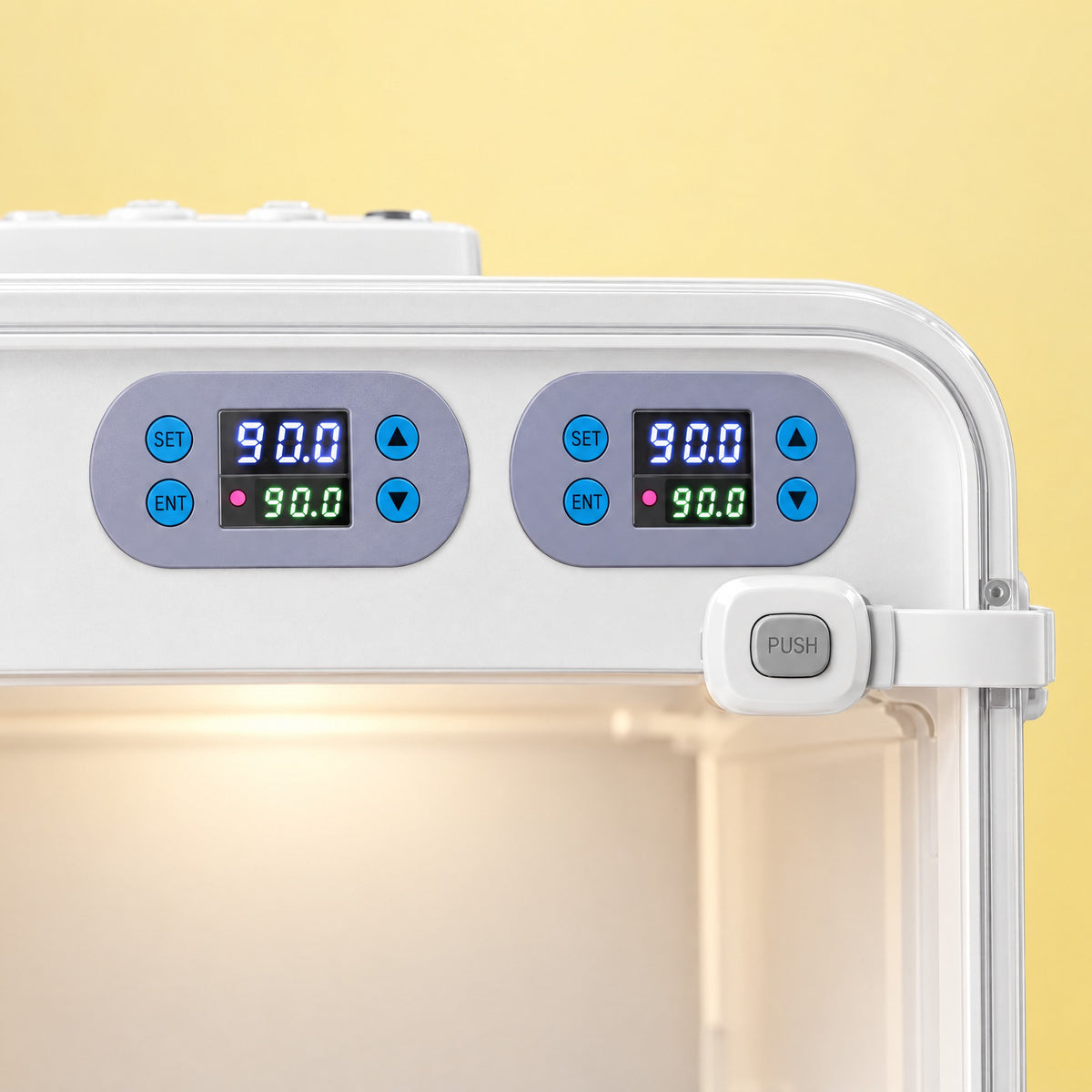
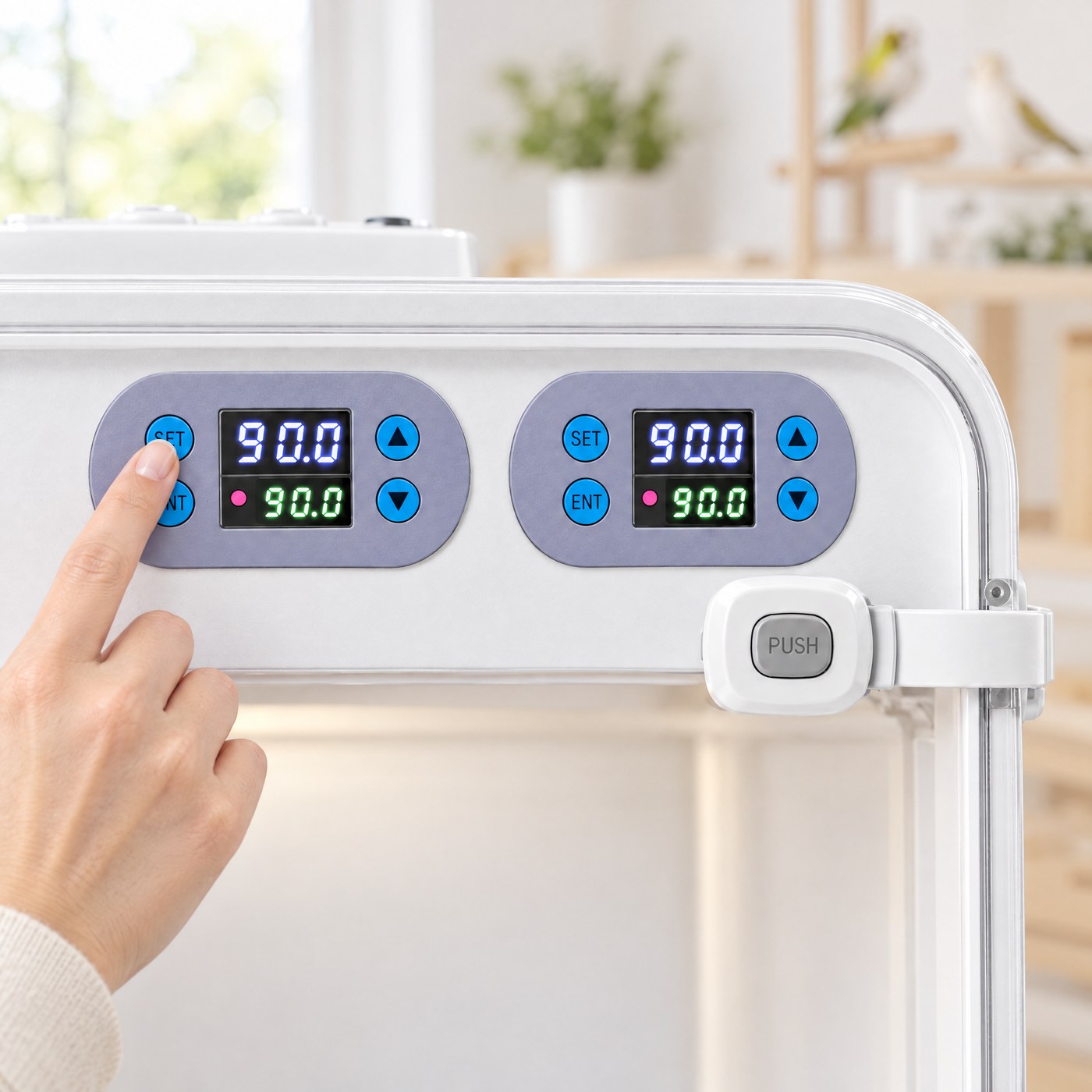
- Two thermostats, set to the same number. Each one shows the temperature in the box and, under it, your setting. The maker fits two so that one backs the other up against overheating.
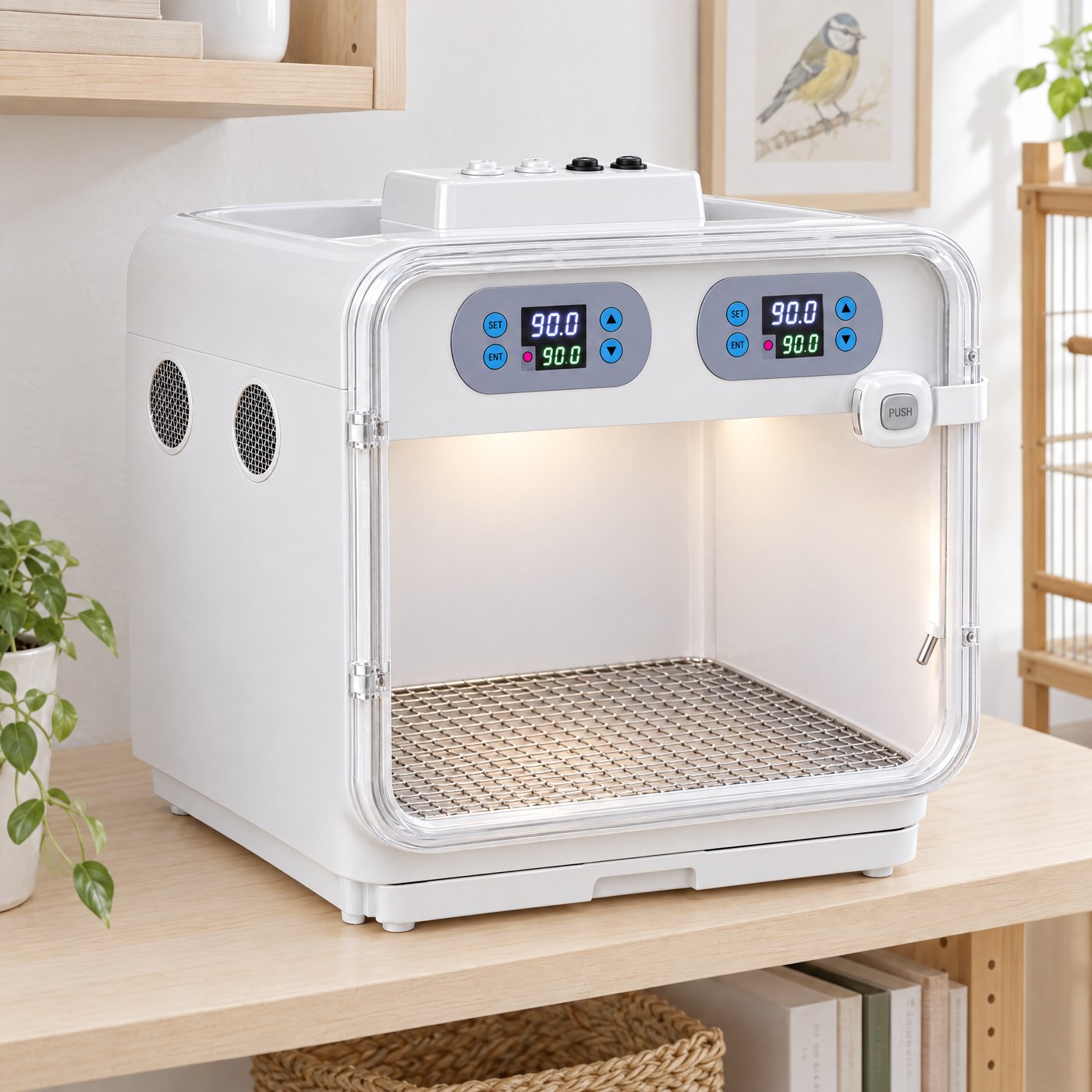
- Warm air, not a hot plate. The heater and its fan sit in the ceiling behind a mesh guard. Warm air moves through the box, and nothing hot is within reach of a beak or a foot.
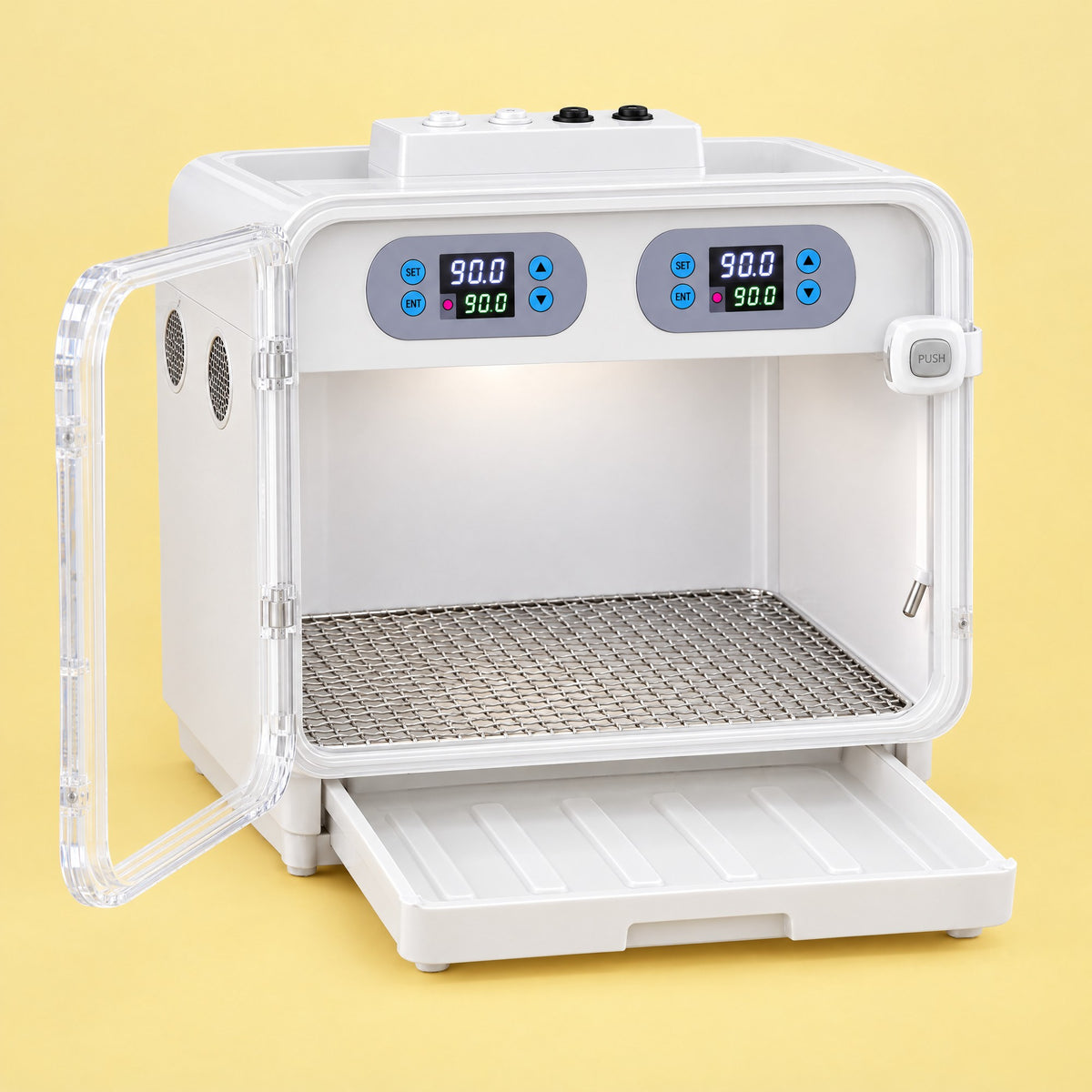
- Fresh air and a clean floor. Switch on air exchange and the box refreshes its air for about five minutes every hour. Droppings fall through the stainless steel wire floor into a drawer that slides out from the front.
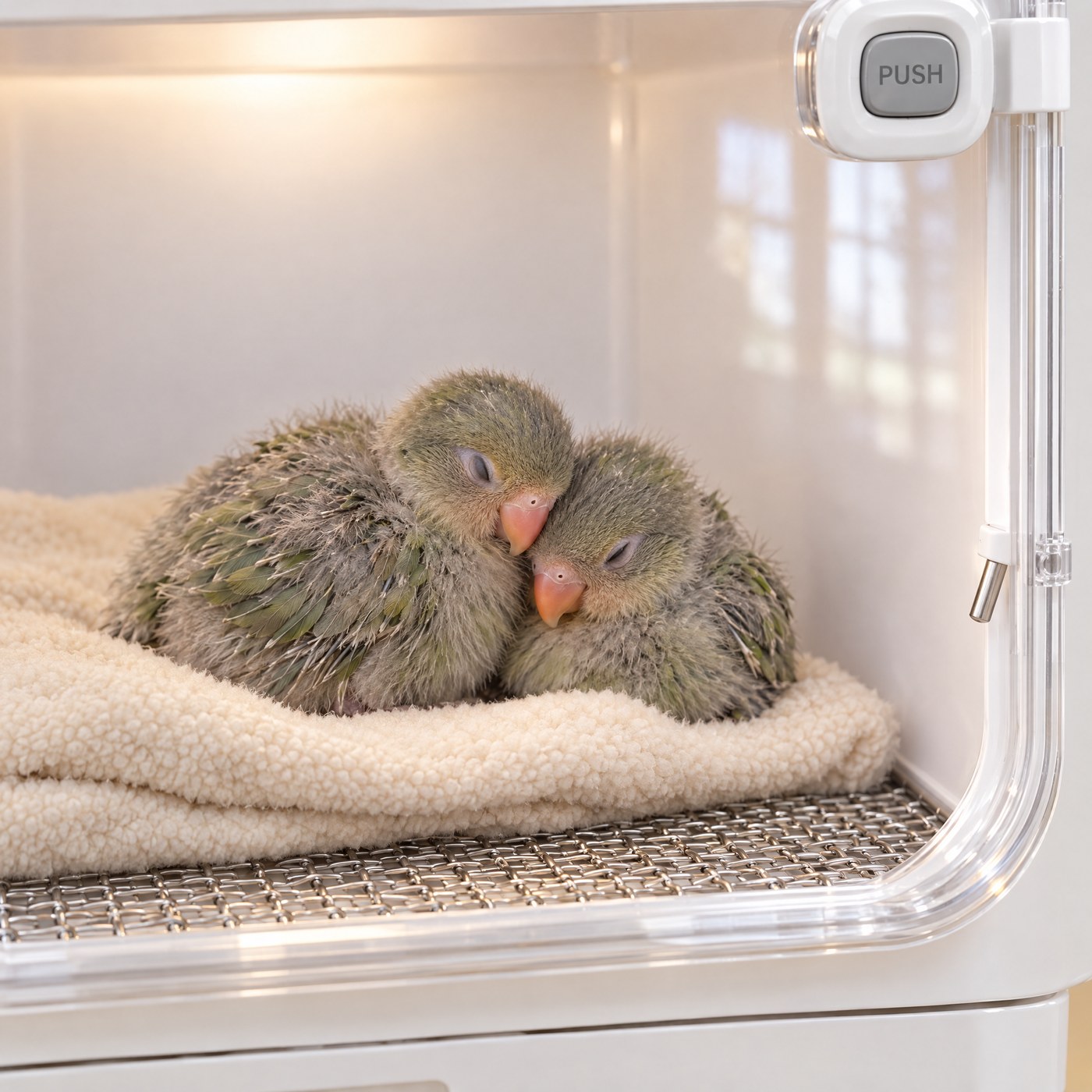
- A light to see by, a UV lamp to clean with. The clear door and interior light let you check on them without opening up. Between clutches, take the birds out and run the UV lamp for 5 to 10 minutes.
Ovatekly Brooder keeps healthy chicks and small birds warm. It is not a medical device: a sick or injured bird needs an avian vet first.
Secure checkout.
Why a brooder
Bare chicks can’t hold their own heat.
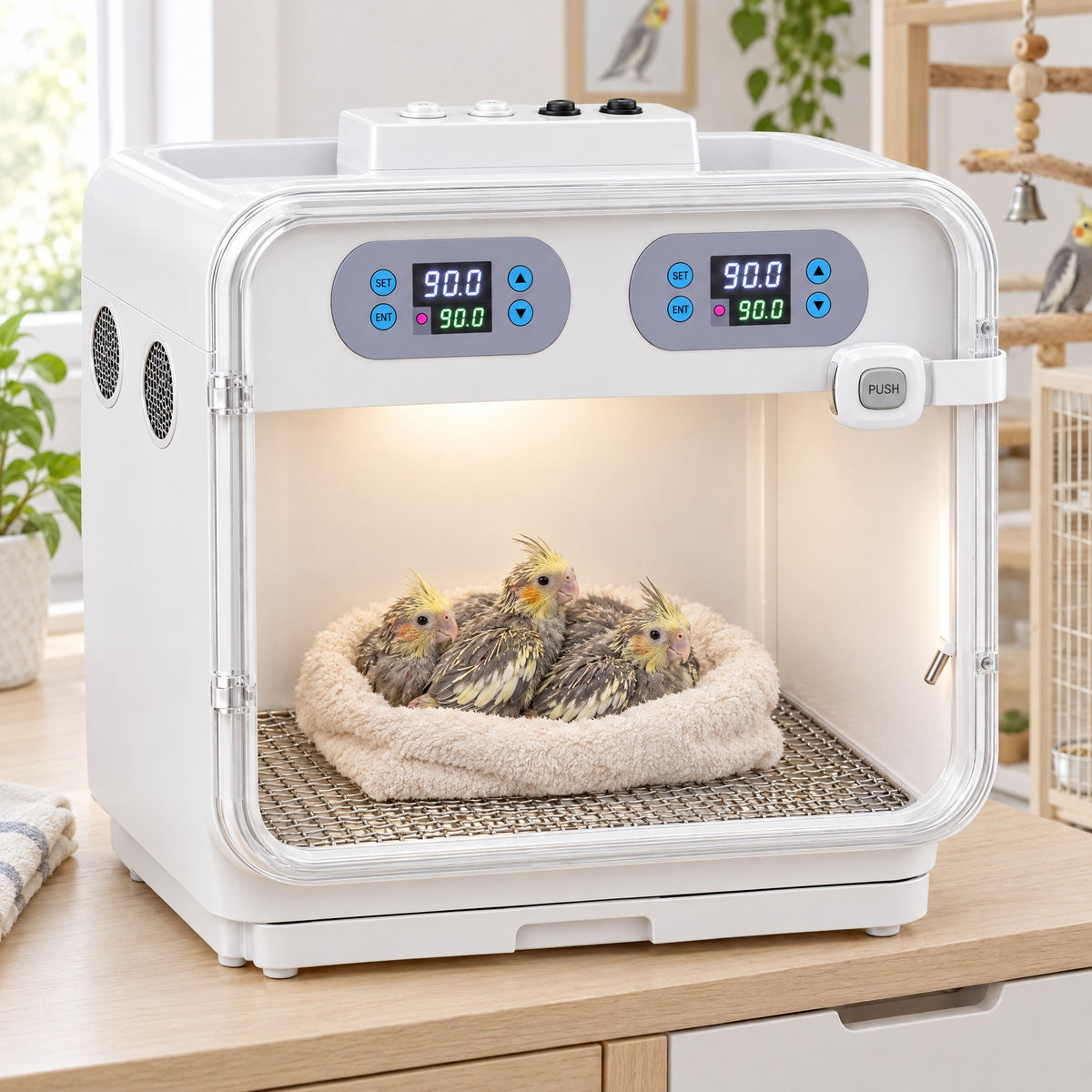
Until their feathers come in, hand-reared chicks rely on you for warmth between feeds. Ovatekly Brooder is a small enclosed box that holds the temperature you set: for a clutch you are hand-feeding, for a bird drying off after a bath, or for one that needs a quiet, warm place on its own.
How a day goes
A day with the Ovatekly Brooder
Set the temperature
Press SET, choose your number with the arrows, then press ENT. Each display shows the temperature in the box on top and your setting under it, in degrees Fahrenheit. Give both thermostats the same number.
Warm air in, stale air out
The heater and its fan sit in the ceiling behind a mesh guard, so warmth comes down as moving air. With air exchange switched on, the box also refreshes its air for about five minutes every hour through the vents on the side.
Look in through the door
The clear door and interior light let you count heads and see who is awake without opening up.

Slide the drawer out
Droppings fall through the wire floor into the drawer below. Slide it out from the front, wipe or re-line it, and slide it back.
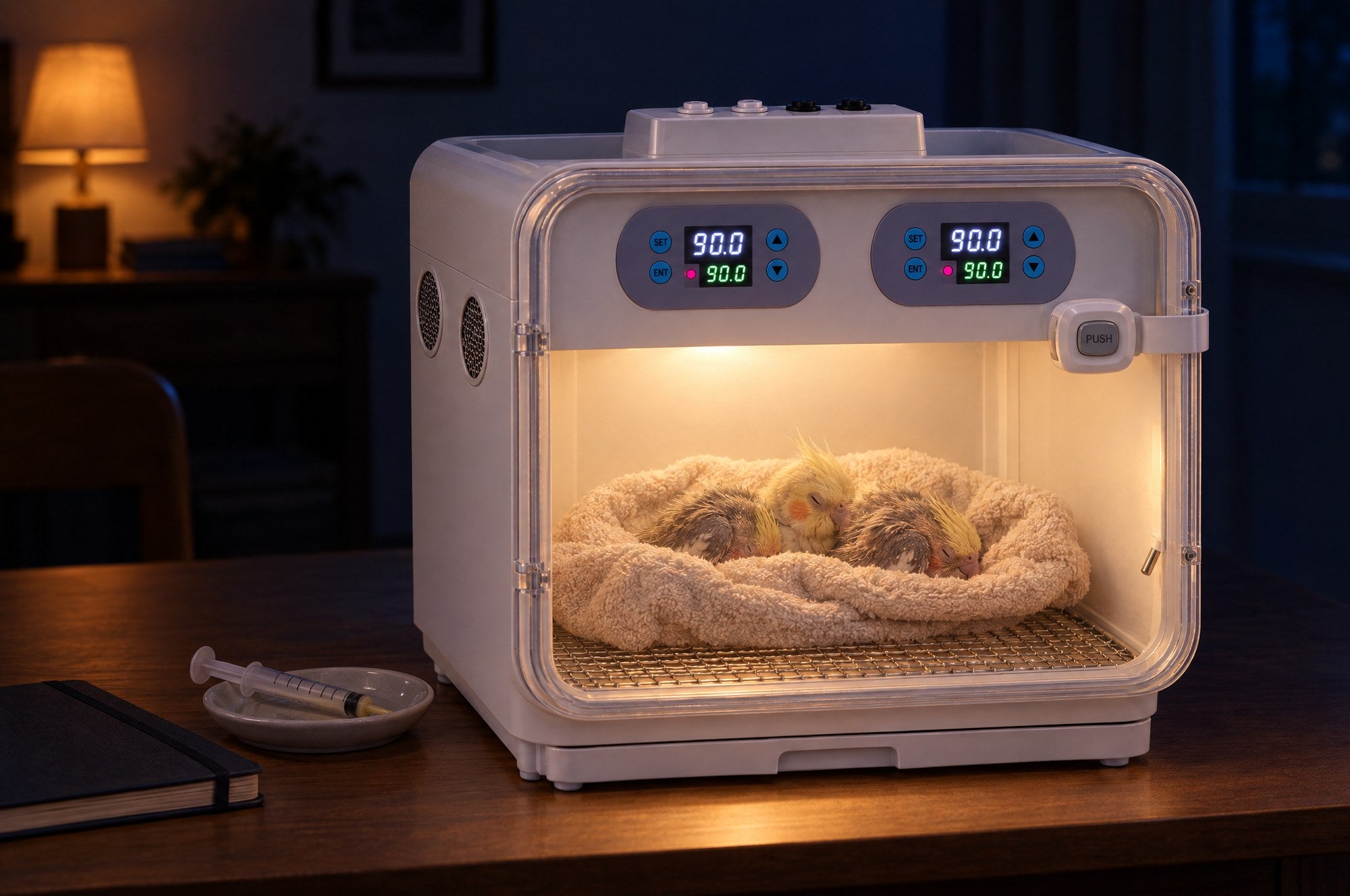
Through the night
A steady box for the 2 a.m. feed.
Hand-rearing means feeds around the clock. The box holds its warmth while you sleep, and the interior light shows you who is awake before you open the door.
- Heats whenever the box is cooler than your setting
- Two thermostats, one backing up the other
- Interior light on its own switch
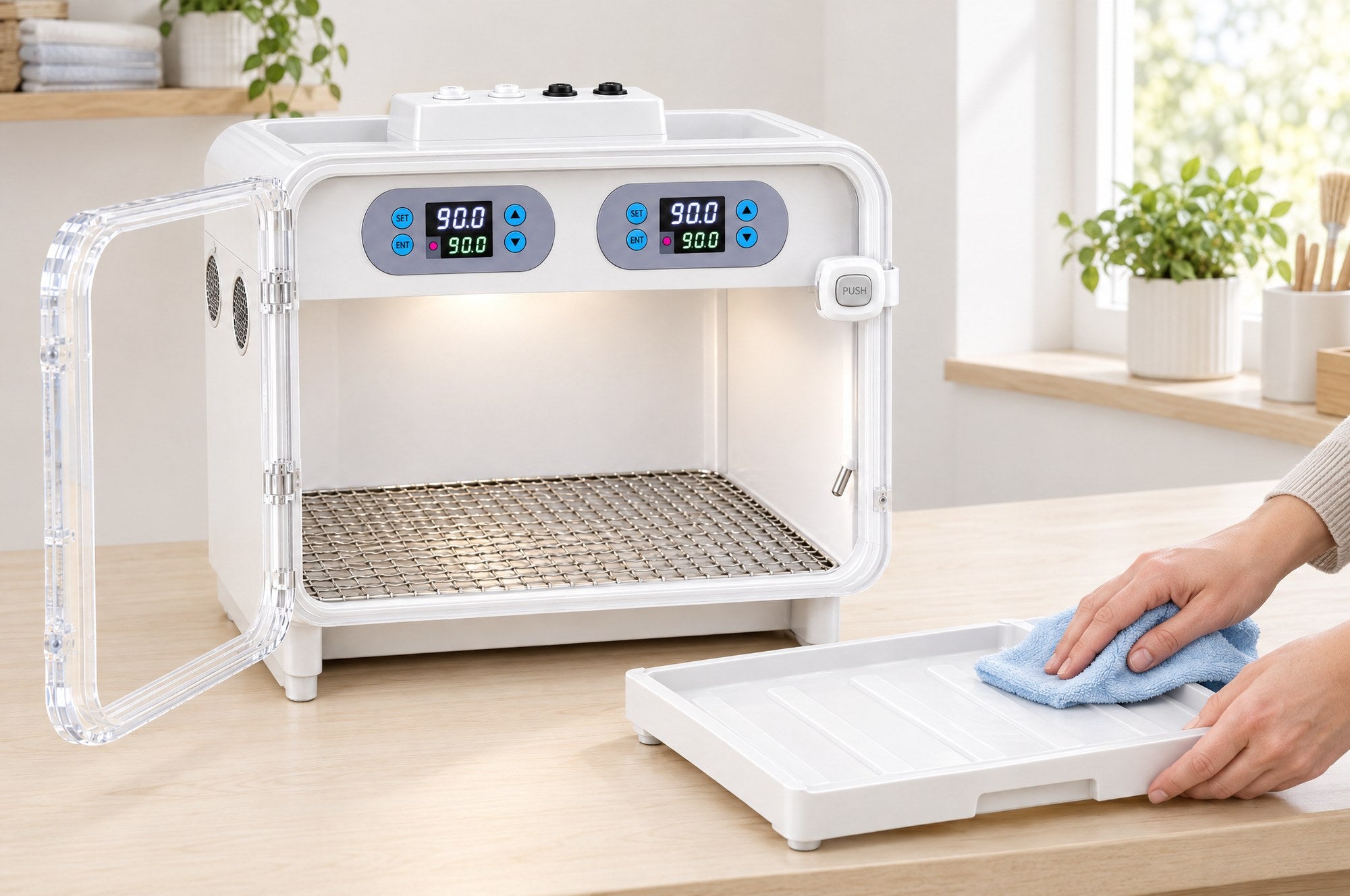
Between clutches
Wipe it out, then run the lamp.
Smooth plastic walls, a stainless steel wire floor that keeps chicks off their droppings, and a drawer that comes out from the front. When the box is empty, the built-in UV lamp runs a 5 to 10 minute cleaning cycle.
- Pull-out drawer under the wire floor
- Wipe with alcohol, never wash it with water
- UV lamp only with the birds out
Side by side
The brooder next to the usual set-up
| What matters | Ovatekly Brooder | Tub with a heat pad or lamp |
|---|---|---|
| Temperature | Held at the number you set | Adjusted by hand, by moving the pad or lamp |
| Where the heat is | Warm air through an enclosed box | One hot spot under or above them |
| Contact with the heater | Mesh guard between birds and heater | Pad or lamp within reach |
| Fresh air | Refreshed for five minutes every hour | When you lift the lid |
| Checking on them | Clear door and interior light | Lift the lid and lose the warmth |
| Cleaning | Wire floor over a slide-out drawer | Change all the bedding |
The right-hand column describes typical home set-ups. Brooding temperature depends on species and age: follow your avian vet or an experienced breeder.
Our promise
Try it with your next clutch.
Questions
Good to know before you order.
Something we haven’t covered? Email contact@ovatekly.com and a real person answers, usually the same business day.
Which birds is it for?
Can I use it for chicken, duck or quail chicks from my incubator?
How many fit?
What temperature should I set?
Does the display read in °F?
Which plug and voltage does it come with?
How do I use the UV lamp?
What are the four switches on top?
Does it control humidity?
Can it cool the box?
Is it an egg incubator?
Is it a medical device?
How long does delivery take?
What if it is not right for us?
The details
Technical details
Full specification
| Size (outside, W × D × H) | 14.8 × 11.8 × 13.8 in (37.5 × 30 × 35 cm) |
|---|---|
| Space inside (W × D × H) | About 14 × 11 × 9.6 in (35.5 × 28 × 24.5 cm) |
| Weight | 7.1 lb (3.2 kg) |
| Body | White PP and ABS plastic, clear door with a push-button latch |
| Heating | Warm-air heater with fan in the ceiling, behind a mesh guard. 150 W. Heats only. |
| Control | Two digital thermostats, each showing the box temperature and your setting, in °F |
| Setting range | Room temperature to 98.6 °F (37 °C) |
| Regulation | Heater comes back on when the box falls about 1 °F (0.5 °C) below your setting |
| Protection | Second thermostat as an overheat back-up |
| Ventilation | Two mesh side vents. Automatic air exchange, about 5 minutes every hour, on its own switch. |
| Light | Interior light, on its own switch |
| UV lamp | Built in, on its own switch. For the empty box only, 5 to 10 minutes. |
| Floor | Stainless steel wire floor over a pull-out drawer |
| Noise | About 30 dB |
| Power | 110 to 120 V, 60 Hz, US plug |
| Suited to | Parrots and small pet birds and their chicks |
| Assembly | None. Arrives assembled. |
| Warranty | 1-year limited warranty |
Ovatekly Brooder is a warming brooder for healthy birds. It is not a veterinary medical device and does not treat any condition. Check the temperature reading regularly and never leave chicks unattended for long periods. Figures are the manufacturer’s.